

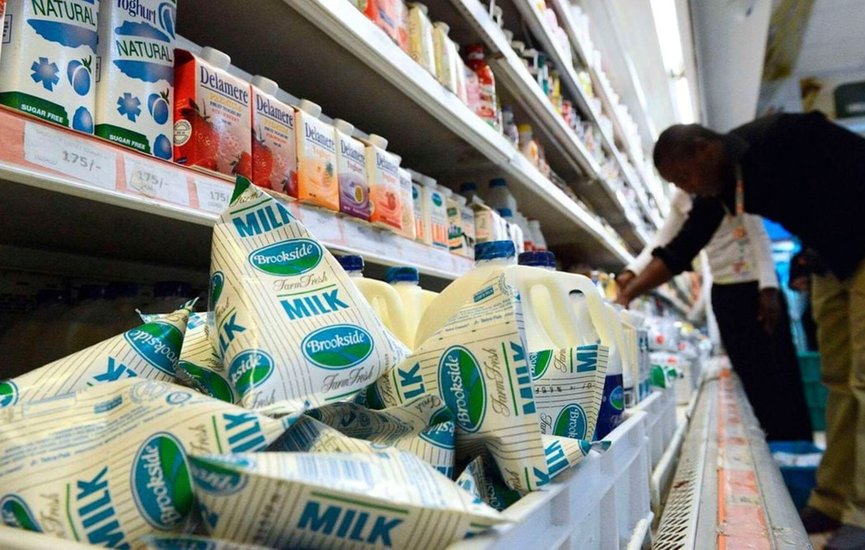
After more than 800 days of trade restrictions in Kenya, Brookside Dairy has secured a crucial export opportunity in Algeria, offering a potential revival for the company’s regional operations. Brookside Dairy Uganda, a subsidiary of the Kenya-based dairy giant, has been granted a three-month exclusive window to supply powdered milk to Algeria providing a much-needed outlet for its stockpile and a strategic entry into North Africa’s $500 million dairy market.
The breakthrough comes after the Kenya Dairy Board (KDB) barred Brookside Uganda’s products from entering the Kenyan market in March 2023, citing concerns over reconstituted milk imports. The ban has sparked controversy, especially as other Ugandan brands like Lato and Dairy Top continue to enjoy unrestricted access to Kenyan shelves. Industry observers suspect the decision may be politically driven, given Brookside’s ties to former President Uhuru Kenyatta, whose family holds a majority stake in the company. Tensions between Kenyatta and his successor, President William Ruto, have further fueled speculation of targeted enforcement.
To mitigate the impact of the prolonged ban, Uganda's Dairy Development and Production Commissioner, Samson Akankiza, confirmed that Brookside Uganda would be the first of four local manufacturers to export powdered milk to Algeria between May and July 2025.
“Brookside had accumulated stock due to restricted access to the Kenyan market. We agreed to allocate them the first export slot to Algeria.”
Akankiza
Following Brookside’s window, Pearl Dairies, Amos Dairies, and Bennifoods will each have a three-month phase to supply Algeria. Bennifoods, the newest entrant in Uganda’s dairy sector, operates a modern plant in Lyantonde District and is expected to benefit from the expanded export strategy. Uganda is also negotiating a potential export channel with Morocco, targeting its rising middle class and a growing demand for packaged dairy products. The Moroccan dairy market, valued at $1.39 billion in 2024, is projected to grow to $1.69 billion by 2030, positioning it as a strategic target for Uganda’s dairy ambitions.
Brookside’s exclusion from the Kenyan market has also raised questions about trade equity under regional blocs such as the East African Community (EAC) and the African Continental Free Trade Area (AfCFTA). President Ruto previously justified the ban as a safeguard against the reconstitution of imported powdered milk in neighboring countries for resale in Kenya arguing the practice undermines local dairy farmers.
Despite the challenges, Brookside remains a dominant player in East Africa’s dairy landscape, with operations in Uganda, Tanzania, and expansion plans for Ethiopia and Nigeria. The company has built a vast network of farmers supported by training programs, access to credit, and cold-chain infrastructure cementing its influence in the region’s agricultural development.
The Algerian export deal offers Brookside more than just a temporary market it presents a strategic reset for its export operations, enabling the company to diversify revenue streams and reduce its dependency on politically sensitive trade corridors.
As Uganda stakes its claim as a rising dairy powerhouse, Brookside’s venture into Algeria could set a precedent for broader market access and underscore the nation’s role in Africa’s agricultural transformation. For Brookside, this lifeline is not merely about survival it’s a second chance to thrive on a larger continental stage.