

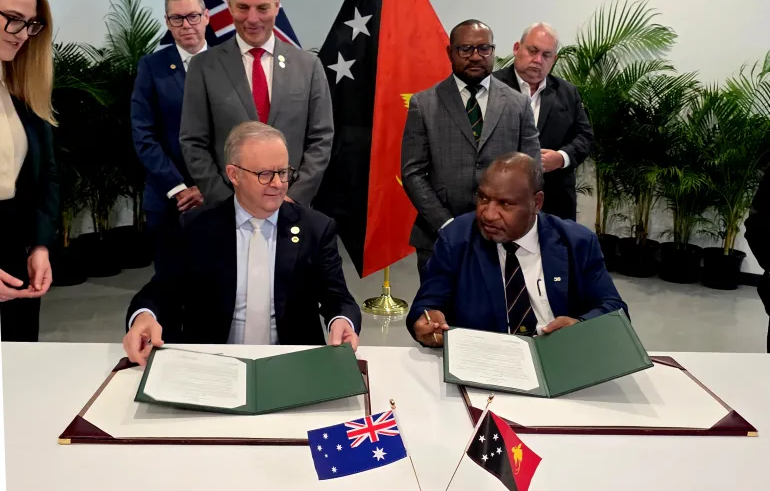
China has issued a firm warning to Papua New Guinea over its proposed mutual defence agreement with Australia, signaling growing tensions in the Pacific region’s strategic landscape. The treaty, known as the Pukpuk Treaty, aims to deepen military cooperation between the two nations and includes a clause committing each country to defend the other in the event of an armed attack. While the agreement is framed as a step toward regional security and stability, Beijing views it as a potential threat to its interests and influence in the Pacific.
In a statement released by China’s embassy in Port Moresby, officials emphasized that while they respect Papua New Guinea’s sovereign right to enter bilateral agreements, such arrangements should not be “exclusive” or undermine the interests of third parties. The message was clear: China expects PNG to maintain balanced and open diplomatic relations, avoiding any alignment that could be perceived as hostile or restrictive. The embassy urged PNG to uphold principles of independence and self-reliance, warning against becoming entangled in geopolitical rivalries that could compromise its autonomy.
The timing of the warning is significant. The treaty was expected to be signed during Papua New Guinea’s independence celebrations, but procedural delays led to the signing of a communique instead, reaffirming both nations’ intent to finalize the agreement soon. Prime Minister James Marape has since announced plans to send his defence minister to Beijing to discuss the treaty’s implications, signaling a diplomatic effort to ease tensions and clarify PNG’s position.
China’s reaction underscores its growing sensitivity to strategic developments in the Pacific, where it has invested heavily in infrastructure, aid, and public services to expand its influence. The region has become a focal point of competition between major powers, with Australia, the United States, and China all vying for partnerships and access. For Papua New Guinea, the challenge lies in navigating these complex relationships while safeguarding its national interests and maintaining regional stability.
As discussions continue, the outcome of this diplomatic exchange could shape the future of security cooperation in the Pacific. It will test PNG’s ability to assert its sovereignty while balancing the expectations of powerful allies and partners. The evolving dynamics also highlight the broader struggle for influence in a region increasingly seen as pivotal to global strategic calculations.