

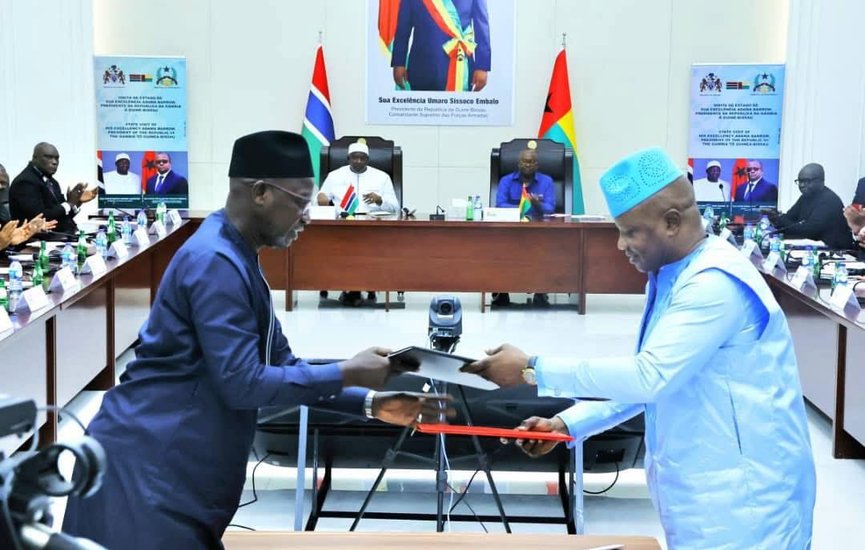
Guinea-Bissau and The Gambia have taken a significant step toward strengthening regional integration and economic cooperation by signing a landmark trade agreement during President Adama Barrow’s state visit to Bissau from September 8 to 9, 2025. The accord, finalized in the presence of President Umaro Sissoco Embaló, reflects a shared commitment to deepening bilateral ties and unlocking new opportunities for cross-border commerce. It marks a turning point in West African diplomacy, where neighboring nations are increasingly prioritizing collaboration over competition to drive inclusive growth.
The agreement, signed by the trade ministers of both countries, aims to reduce trade barriers and streamline the movement of goods and people in alignment with ECOWAS protocols. It includes provisions to improve transport infrastructure, harmonize customs procedures, and facilitate joint procurement of essential commodities. These measures are expected to enhance market access for businesses, lower transaction costs, and stimulate industrial development across both nations. By fostering a more fluid and efficient trade environment, the pact lays the groundwork for long-term economic resilience.
Beyond trade, the two governments pledged to expand cooperation in key sectors such as public health, education, and infrastructure. This includes collaborative efforts to improve healthcare delivery, strengthen educational exchanges, and develop shared transport corridors that connect rural and urban markets. The agreement also encourages private sector engagement, with a focus on supporting small and medium-sized enterprises and promoting entrepreneurship. These initiatives are designed to create jobs, raise living standards, and build a foundation for sustainable development.
The signing of this agreement signals a broader shift in West Africa’s regional dynamics, where countries like Guinea-Bissau and The Gambia are embracing pragmatic partnerships to overcome shared challenges. It reflects a growing recognition that economic progress is best achieved through cooperation, innovation, and mutual respect. As both nations begin to implement the terms of the accord, the success of this partnership will depend on sustained political will, transparent governance, and active participation from civil society and the business community. If effectively executed, this trade agreement could serve as a model for other nations in the region, demonstrating how strategic collaboration can unlock prosperity and strengthen regional unity.