

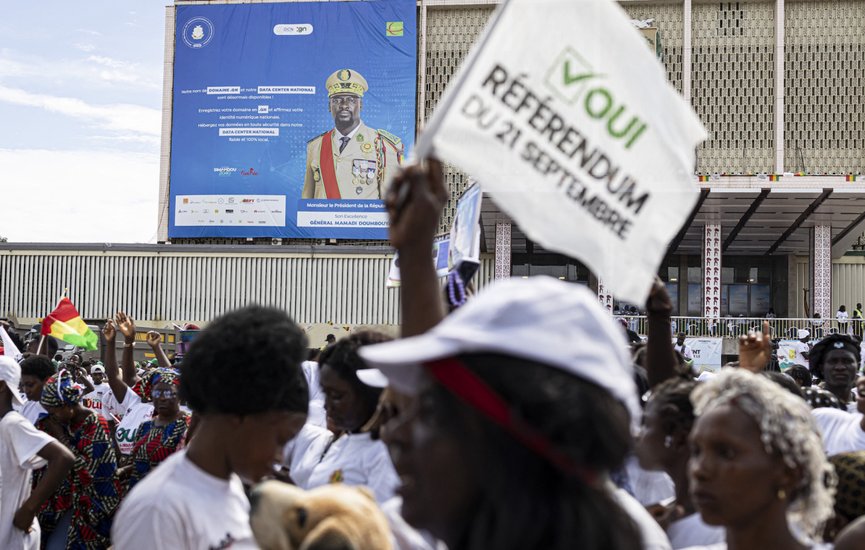
Guinea’s recent constitutional referendum represents a defining moment in its pursuit of political transformation and institutional reform. With nearly 90 percent of voters endorsing the new charter and a turnout surpassing 86 percent, the vote demonstrated remarkable public engagement. Yet, beneath the surface of these numbers lies a complex and contentious process. The referendum, held under the leadership of the transitional government, introduced sweeping changes to the country’s political architecture, including the extension of presidential terms from five to seven years, the creation of a Senate, and the removal of restrictions preventing junta members from seeking elected office. These provisions have sparked both hope and concern, as they open the legal path for General Mamady Doumbouya, who led the 2021 coup, to potentially run in the December 2025 presidential election.
Supporters of the new constitution argue that it lays the groundwork for stability, modernization, and a return to civilian rule. They view the reforms as necessary steps to rebuild trust in governance and to establish a more inclusive and resilient political system. However, critics contend that the referendum was orchestrated to consolidate power under the guise of democratic renewal. Opposition leaders, many of whom remain in exile, have condemned the vote as a “masquerade,” citing reports of pre-marked ballots, voter intimidation, and the suppression of dissent. The suspension of opposition parties and the ban on public demonstrations have further fueled accusations that the process lacked transparency and fairness.
Despite these criticisms, the transitional government maintains that the referendum reflects the will of the people and marks a critical step toward restoring constitutional order. Prime Minister Amadou Oury Bah has defended the outcome as a civic triumph, emphasizing the importance of both “yes” and “no” votes in demonstrating democratic vitality. His refusal to resign in the face of opposition pressure underscores the administration’s determination to steer the country through its transition, even as questions linger about the legitimacy and inclusiveness of the process.
As Guinea prepares for the upcoming presidential election, the stakes could not be higher. The referendum has set the stage for a contest that may determine whether the country moves toward genuine civilian governance or entrenches military influence under a constitutional framework. For many Guineans, the outcome represents more than a political shift, it is a test of the nation’s commitment to justice, accountability, and the principles of democracy. The months ahead will be crucial in shaping the future of Guinea, as citizens, leaders, and institutions grapple with the promises and perils of this high-stakes transformation.