

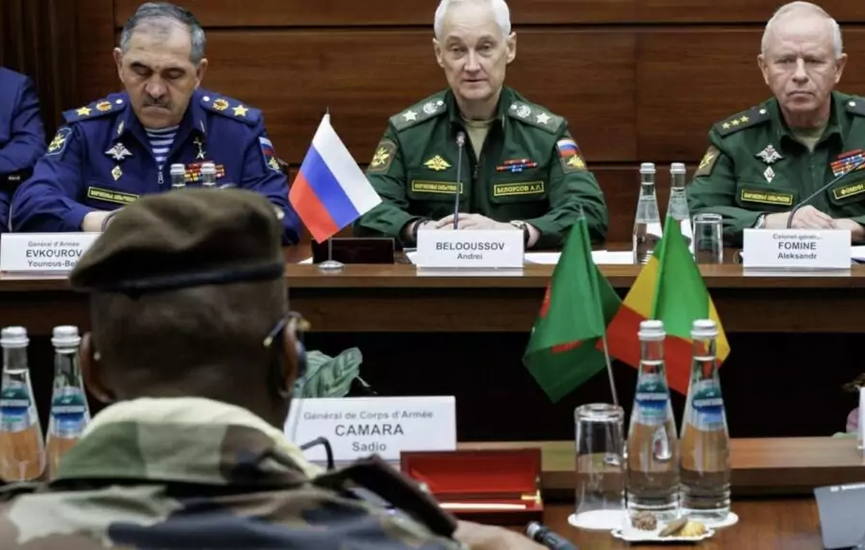
Russia’s growing military footprint in Mali is increasingly seen as a destabilizing force, accelerating the country’s descent into political fragmentation and insecurity. Initially introduced through Wagner Group mercenaries in 2021, the Russian presence was intended to bolster Mali’s fight against jihadist insurgents. However, instead of reversing militant gains, their deployment has coincided with the expansion of jihadist operations into previously stable regions. Attacks have surged in central and western Mali, with militants targeting urban centers and military installations, exposing the limitations of Russia’s counterinsurgency strategy.
The situation deteriorated further after Wagner’s withdrawal in June 2025, when Russia’s Africa Corps assumed operational control. This transition failed to improve coordination with Malian forces, and tensions within the ruling junta have reportedly intensified over disagreements with Russian personnel, who often operate outside Malian command structures. A deadly ambush in August near Ténenkou, which claimed the lives of over 14 Russian and 35 Malian soldiers, underscored the vulnerability of joint operations and the growing strength of al-Qaeda-affiliated groups. The incident also highlighted the fractured nature of Mali’s military hierarchy, where mistrust and poor communication have undermined operational effectiveness.
Beyond the battlefield, Russia’s limited access to Mali’s mineral wealth has sparked frustration in Moscow, while the arrival of Turkish contractors to train the president’s security detail has further strained bilateral relations. These developments reflect a broader erosion of trust and strategic alignment between the two countries. The legacy of Wagner’s involvement—marked by allegations of human rights abuses and civilian casualties—has damaged public confidence in both the military and the government, creating fertile ground for jihadist recruitment and weakening the state’s legitimacy.
Despite ongoing base development in Bamako, Russia’s commitment to Mali appears increasingly counterproductive. The collapse of the Assad regime in Syria has cast doubt on Moscow’s reliability as a long-term partner, raising concerns about the sustainability of its influence in Africa. As Mali grapples with insurgency, internal divisions, and diplomatic isolation, the Russian military presence is no longer viewed as a stabilizing force. Instead, it has become a symbol of external interference and strategic miscalculation—one that risks accelerating the collapse of state institutions and deepening the country’s crisis.