

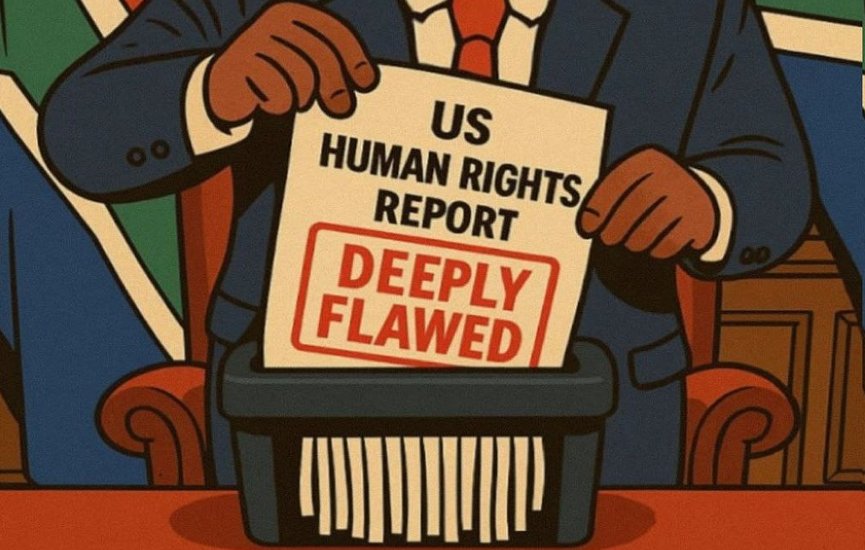
South Africa has firmly rejected recent claims made by the United States regarding its human rights record, calling the allegations misleading and hypocritical. The 21-page report released by Washington accused South Africa of deteriorating human rights conditions, citing land expropriations from Afrikaners, abuses against racial minorities, and alleged extrajudicial killings in provinces such as KwaZulu-Natal. In response, South Africa’s Department of International Relations and Cooperation (DIRCO) dismissed the report as relying on discredited sources and failing to reflect the country’s legal processes, which ensure that criminal suspects are formally arraigned in court.
DIRCO further criticized the U.S. for its pattern of issuing unilateral judgments on other nations while refusing oversight by international bodies like the United Nations Human Rights Council. The department highlighted America’s own unresolved human rights challenges, including systemic racial inequality and institutional violence. International relations analyst Zimkhita Nene reinforced this view, pointing out the glaring double standards in Washington’s critique. She emphasized that South Africa’s constitution not only meets global human rights benchmarks but also goes further by enshrining socioeconomic rights to address historical injustices. In contrast, she noted, the U.S. continues to grapple with movements such as Black Lives Matter and Say Their Names, which expose deep-rooted violence against people of color.
The strained relationship between Pretoria and Washington has been further exacerbated by South Africa’s decision to file a case against Israel at the International Court of Justice, accusing it of violating the Genocide Convention in Gaza. Diplomatic tensions intensified during Donald Trump’s presidency, when the U.S. cut aid to South Africa and expelled its ambassador following criticism of American foreign policy. Most recently, Foreign Minister Ronald Lamola warned that repeated U.S. interference in South Africa’s domestic affairs has driven bilateral relations to a historic low. South Africa’s response underscores its commitment to sovereignty, constitutional integrity, and a more balanced global dialogue on human rights.