

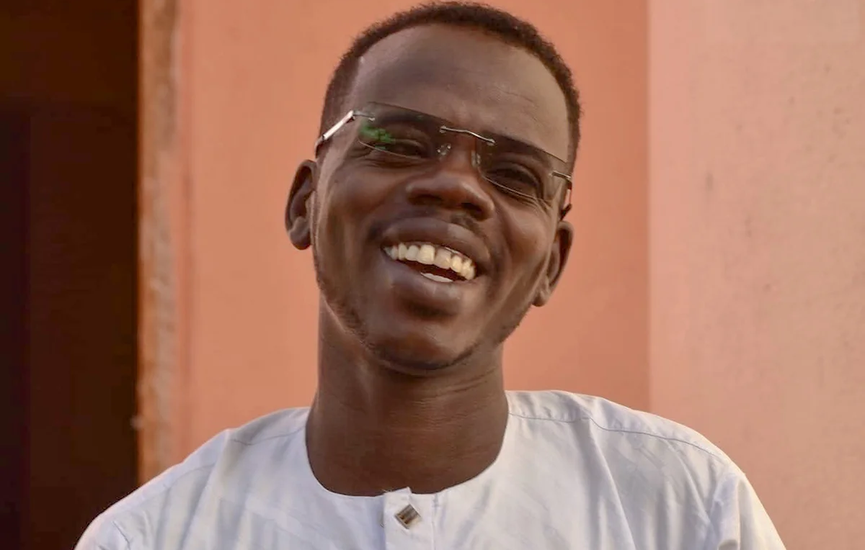
Mohamed Khamis Douda was not a soldier, politician, or journalist. He was a civilian who chose to bear witness. In the besieged city of El Fasher, the capital of North Darfur, Douda became a lifeline to the outside world. As the paramilitary Rapid Support Forces (RSF) tightened their grip on the city, cutting off supplies and bombarding neighborhoods, Douda documented the suffering with unwavering resolve. Through social media and encrypted messaging apps, he shared harrowing accounts of starvation, displacement, and death, offering the world a rare glimpse into a humanitarian catastrophe unfolding in real time.
His courage was not without consequence. As his reports gained traction, RSF fighters began to hunt him. Survivors who escaped the city recounted how RSF soldiers asked about Douda by name, demanding to know if he was still inside. Videos circulated online in which RSF members threatened to kill him. Despite the danger, Douda refused to flee. He understood that his voice was one of the few remaining threads connecting El Fasher to global consciousness. To leave would be to silence the truth.
When RSF forces finally overran El Fasher after a siege that lasted more than 500 days, Douda was killed. His death sent shockwaves through Sudan and beyond. Activists, aid workers, and ordinary citizens mourned the loss of a man many now call “a true hero of the war.” His final act, choosing to stay and speak out, has become a symbol of resistance and moral clarity in a conflict marked by brutality and silence.
The fall of El Fasher was catastrophic. According to the Sudan Doctors Network, more than 1,500 civilians were killed in just three days during the RSF’s final assault. The group described the massacre as “a true genocide,” citing mass executions, sexual violence, and starvation tactics. Entire neighborhoods were razed, and humanitarian corridors were blocked, leaving tens of thousands without food, water, or medical care. Douda’s reports had warned of this outcome, but the world was slow to respond.
His legacy endures in the testimonies he preserved and the awareness he raised. In a war where truth is often the first casualty, Douda’s voice cut through the fog. He was not just a witness, he was a conscience. His story underscores the peril faced by activists and civil society figures in Sudan, many of whom are now being targeted by armed groups. As the conflict deepens and international attention wanes, the need for voices like Douda’s grows more urgent. His sacrifice reminds us that even in the darkest corners of war, one person’s courage can illuminate the path to justice.