

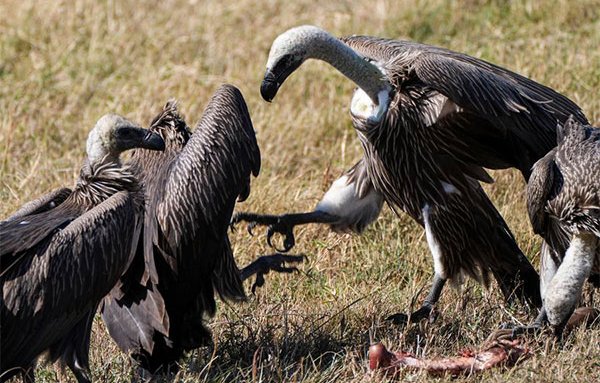
Every year, on the first Saturday of September, the world marks International Vulture Awareness Day (IVAD) to shine a light on the dire state of these majestic birds. But, amidst the celebration, Africa’s vultures a crucial part of the continent's ecosystem are facing a catastrophic decline, with some species down by as much as 97% in the last five decades. This isn't just a loss for biodiversity; it’s a ticking time bomb for Africa’s ecological balance. Vultures, nature's ultimate clean-up crew, play an irreplaceable role in maintaining environmental health. But without them, the ecosystem could collapse, creating far-reaching social and economic repercussions.
Much like the doomed dodo from centuries ago, vultures are facing extinction. In Africa, the cause of their decline is multifaceted: poisoning both intentional and unintentional has emerged as the leading culprit, contributing to more than 60% of vulture deaths. Poachers deliberately target these birds, using them as "signals" to locate their illegal activities. In other cases, livestock owners poison vultures in retaliation for predators attacking their animals. Added to this threat is belief-based use, where vultures’ body parts are believed to have medicinal or mystical powers, further fueling their slaughter.
Beyond these pressing issues, vultures are also falling victim to collisions with power lines, habitat destruction, and the growing impact of infrastructure development. However, in the face of such challenges, there is hope. BirdLife International, the world’s largest conservation partnership, is actively working to save vultures across Africa through innovative, community-driven initiatives.
In Eastern Africa, efforts to reduce poisoning and mitigate belief-based use have been successful through collaboration with local communities. In Kenya, predator-proof bomas are helping reduce retaliatory poisoning by protecting livestock from predators. In Tanzania, traditional healers are being engaged to substitute vulture parts with plant-based alternatives.
Furthermore, BirdLife has made strides in creating Vulture Safe Zones (VSZs) in Southern Africa. More than one million hectares across Zambia, Zimbabwe, Botswana, and South Africa have been designated safe havens where vultures can thrive without the looming threat of poisoning. In West Africa, a coalition of organizations, including BirdLife and the Convention on the Conservation of Migratory Species of Wild Animals (CMS), launched the West Africa Vulture Conservation Action Plan in 2024, which spans 16 countries and aims to protect vulture populations by 2043.
While conservation actions on the ground are essential, awareness campaigns are just as crucial. A recent report by BirdLife revealed that vultures provide ecosystem services worth a staggering $1.8 billion annually in Southern Africa alone. This emphasizes the urgent need for continued efforts to protect these birds not just for their own survival, but for the survival of ecosystems across the continent.
As we observe International Vulture Awareness Day, it is clear that saving Africa's vultures requires cooperation on a national, regional, and continental scale. The time to act is now. Only through united efforts can we ensure that Africa’s vultures do not become another tragic page in the history of extinct species. Let’s not allow these sovereigns of the African skies to disappear forever.