

Uganda has taken a bold step toward maximizing the value of its mineral resources with the launch of the Wagagai Gold Mining Project in Busia. President Yoweri Museveni, joined by Chinese investors, unveiled plans to establish a Mineral Wealth Fund that will channel revenues from gold and oil into lasting infrastructure such as roads, railways, health facilities, and sports stadiums. The initiative aims to transform Uganda’s mineral wealth into sustainable development, create thousands of jobs, and ensure that the country benefits fully from its resources rather than exporting unprocessed minerals.
President Yoweri Museveni has officially launched the Wagagai Gold Mining Project in Busia, alongside Chinese investors, and proposed the creation of a Mineral Wealth Fund to channel Uganda’s gold and oil revenues into lasting infrastructure. The fund is intended to finance railways, roads, power plants, health facilities, and sports stadiums to benefit Ugandans long after the country’s mineral resources are depleted.
“Gold is finite, but the infrastructure we build with its wealth will stand as a lasting legacy,” Museveni said. “We must end the colonial mindset of exporting raw minerals for others to profit. As long as I am president, no unprocessed minerals will leave Uganda.” He noted that processing gold locally increases value, highlighting that 99.99% pure gold refined at Wagagai earns UGX 360 million per kilogram compared to UGX 140 million abroad.
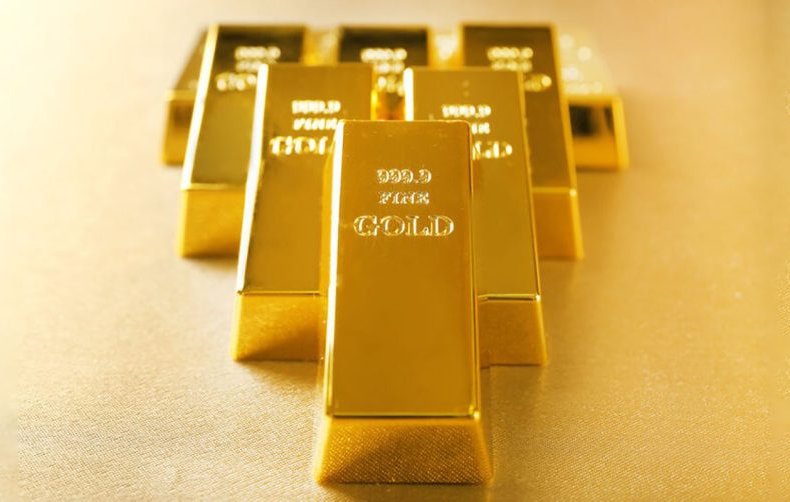
The Wagagai Gold Refinery, established in 2019 by China’s Liaoning Hongda Enterprise Group under a 21-year concession, represents a $150 million investment. General Manager Tan Jiuchang said the refinery has employed over 2,000 Ugandans, trained 700 local workers, and invested nearly $1 million in community welfare. “Our state-of-the-art technology produces 99.99% pure gold bullions, setting a benchmark for Uganda’s mining sector,” he said.
Expansion plans include a $50 million investment by 2027 to reach ore at 600 meters, and another $50 million by 2035 to reach 1,000 meters. The refinery is projected to produce 1.2 tonnes of gold annually, generating $100 million in foreign exchange and creating up to 5,000 jobs across agriculture, real estate, logistics, healthcare, and tourism.
Energy and Mineral Development Minister Dr. Ruth Nankabirwa called the refinery a cornerstone of Uganda’s Vision 2040, noting that gold, valued at $107,773 per kilogram, generated $3.8 billion in exports last year surpassing all other commodities. She said the facility reduces reliance on foreign refineries, retains wealth locally, and creates 3,000 direct and indirect jobs, especially for youth.
Uganda’s gold deposits in Busia alone are estimated at 25–30 million tonnes of ore, with grades of 1–1.5 grams per tonne. The country also holds significant deposits of graphite, iron ore, and rare earth elements. Nankabirwa emphasized gold’s applications beyond jewelry, including electronics, medicine, aerospace, and as a reserve asset for central banks.
The Bank of Uganda has already piloted a gold purchase program. China’s Ambassador to Uganda, Zhang Lizhong, said the project strengthens bilateral ties, noting that Wagagai contributes $10 million annually in tax revenue and supports industrial growth. China’s zero-tariff policy for African nations has boosted Uganda’s exports to China by 103.4% in 2025.
Busia District LC5 Chairperson Stephen Wasike Mugeni highlighted the local impact, saying artisanal miners previously processed gold at 86% purity, earning UGX 220 million per kilogram, whereas Wagagai’s 99.99% purity unlocks far greater value for the community and economy.
Museveni emphasized that Uganda’s mineral wealth should fund long-term development. “A sports stadium or railway built with gold revenue will serve Busia and Uganda for generations,” he said. The Wagagai Gold Project, with advanced technology and sustainable practices, stands as a model for Uganda’s mineral future, promising economic growth, job creation, and a legacy of infrastructure for generations to come.