

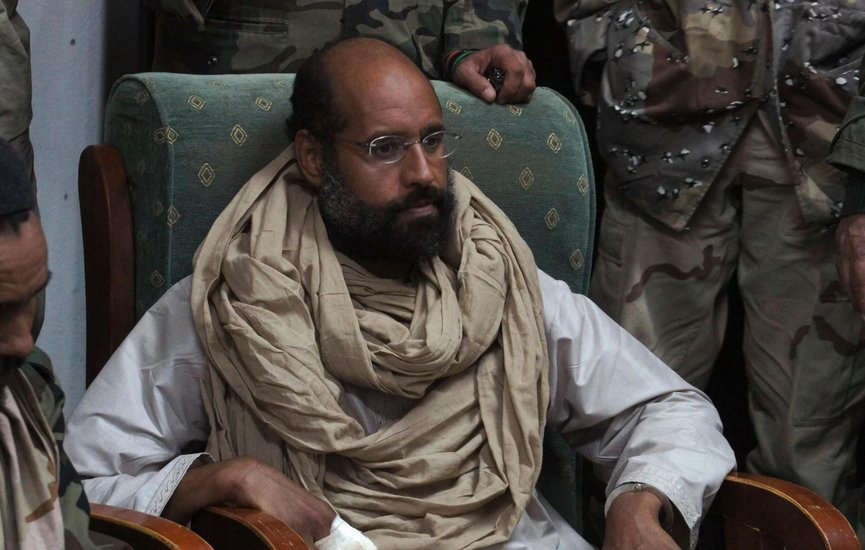
The reported death of Saif al-Islam Gaddafi, son of Libya’s long-time ruler Muammar Gaddafi, has reignited discussions about the fragility of political legitimacy in countries emerging from conflict. More than a decade after the fall of Muammar Gaddafi, Libya continues to struggle with divided institutions, competing militias, and fragmented governance.
Saif al-Islam, once seen as a potential reformist within the Gaddafi regime, became a polarizing figure in Libya’s post 2011 political landscape. His death marks not only the end of an individual’s political journey but also highlights the ongoing challenges faced by states where authority is contested and leadership is derived from lineage or military power rather than broad-based consensus.
Political analysts point out that Libya’s instability stems from the weakness of its national institutions. Rival governments in Tripoli and Tobruk, combined with influential local militias, have resulted in a fragmented system where decisions are often guided by personal alliances and regional interests instead of coordinated national policy. In such circumstances, leadership changes, whether through elections, coups, or deaths, can significantly shift power dynamics, sometimes leading to renewed conflict or uncertainty.
The case of Saif al-Islam also reflects a broader pattern seen in other divided states: legitimacy based on inheritance or coercion rarely provides a stable foundation for governance. Trust, transparency, and consensus-building are essential for maintaining national unity and political stability. Without these elements, divisions deepen, economic recovery slows, and the risks of renewed conflict remain high.
For Libya, the death of a figure associated with the Gaddafi era is both symbolic and practical. While it may temporarily remove a focal point for certain political factions, it does little to resolve the structural weaknesses that continue to undermine governance. Observers emphasize that achieving sustainable stability will require inclusive political processes, institutional reforms, and a commitment to national reconciliation that extends beyond individual personalities.
As the country observes its leaders navigate an uncertain landscape, the lesson is clear: in fragmented states, leadership alone cannot ensure stability; legitimacy, consensus, and institutional strength are essential.